


Recovering From a Disc Injury: What You Need to Know
Being told you have a disc bulge, protrusion or herniation can feel alarming. For many people, the immediate fear is a lifetime of back pain, limited movement, or inevitably going under the knife. The good news? That’s rarely how the story ends.
At Inline Physio, with clinics in Ashgrove, Moorooka, and Samford, our physiotherapists work with people recovering from disc injuries every day. Here’s what the current evidence says, and why the outlook is far more hopeful than most people expect.
What Is a Disc Injury? Bulge vs Protrusion vs Herniation
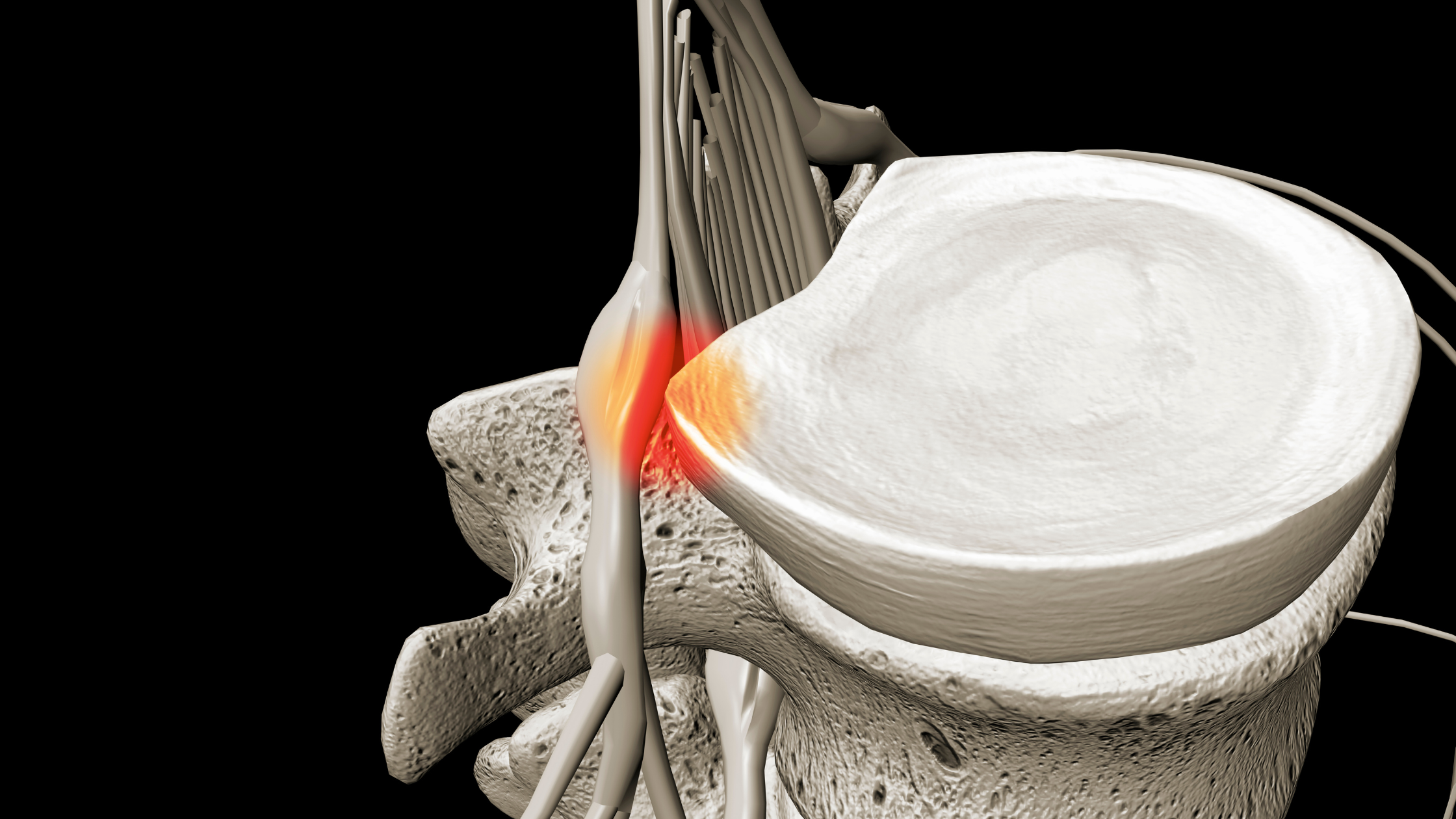
The discs in your spine sit between the vertebrae and act as shock absorbers. Each disc has a tough outer ring (the annulus fibrosus) and a soft, gel-like centre (the nucleus pulposus). When the disc is stressed or damaged, the material inside can shift outward, and the degree to which that happens determines the diagnosis.
Disc Bulge
The disc extends slightly beyond its normal boundary, but the outer fibres remain largely intact. Often found incidentally on imaging in people with no pain at all.
Disc Protrusion
A more focal extension where the outer fibres begin to weaken, allowing disc material to push further outward, but still contained within the outer layer.
Disc Herniation (or Extrusion)
Disc material breaks through the outer fibres and extends into the spinal canal. In some cases, a fragment separates completely (sequestration). This is the most significant type and, perhaps surprisingly, often has the best capacity to heal.
Key point: Imaging findings don’t always match your symptoms. Many people have disc bulges or even herniations without any pain. The scan shows structure – not necessarily suffering.
Do Disc Herniations Heal on Their Own?
Yes, and often more effectively than people realise. One of the most important findings from modern spinal research is that larger disc herniations frequently have an excellent capacity to reduce in size over time.
When disc material extends outside its normal boundary, the body’s immune system recognises it as foreign or damaged tissue and initiates a natural resorption process. The herniated material can shrink, sometimes dramatically, without any surgical intervention.
This resorption process helps explain why so many people with significant disc herniations, even those with nerve compression and leg pain (sciatica), achieve excellent outcomes through physiotherapy-led rehabilitation alone.
Spinal Discs Are Adaptable – Not Fragile
A common misconception is that a disc injury means the spine is fragile and needs to be permanently protected. In reality, spinal discs are living tissues that respond to load, much like muscles, tendons and bone.
Research consistently shows that appropriate movement and progressive loading encourage fluid exchange within the disc and support tissue adaptation. Prolonged rest and activity avoidance, by contrast, can contribute to deconditioning, stiffness, and a reduced tolerance to movement, none of which help recovery.
The goal of rehabilitation isn’t simply to reduce pain in the short term, it’s to rebuild the spine’s capacity to handle the demands of your work, sport, and everyday life.
What Is Graded Loading and Why Does It Work for Disc Injuries?
Graded loading is a structured approach where you progressively expose the spine to activities and movements that have become painful or avoided. The premise is straightforward: tissues adapt to the demands placed on them, but those demands need to be introduced gradually and safely.
A graded loading program might include:
- Walking programs, beginning with short distances and building duration
- Progressive strength training, starting with low load and building over weeks
- Bending and lifting exercises, reintroduced carefully to restore confidence and capacity
- Sport- or work-specific rehabilitation tailored to what you need to return to
- Education about pain and movement – because understanding your injury changes how you respond to it
The key is finding the right starting point for your current capacity, and working with a physiotherapist who understands how to progress that load safely over time.
How Long Does Recovery from a Disc Injury Take?
Recovery timelines vary depending on the type and severity of the disc injury, your overall health, how long symptoms have been present, and how quickly rehabilitation begins. Most people with an acute disc herniation see significant improvement within 6–12 weeks of appropriate management.
For those with more chronic or complex presentations, rehabilitation may take longer – but meaningful improvement is still the norm, not the exception. Surgery is rarely required and is typically considered only when conservative management has not produced progress, or when there is significant neurological compromise.
Frequently Asked Questions About Disc Injuries
Can I exercise with a disc herniation?
Yes. Exercise is a core part of disc injury recovery. The type, intensity and volume need to be matched to your current capacity, but movement is generally beneficial, not harmful. Your physiotherapist will guide you through what’s appropriate.
Does a disc bulge always cause pain?
No. A significant proportion of people have disc bulges visible on MRI with no symptoms at all. Imaging findings need to be interpreted alongside your clinical presentation, not in isolation.
Will I need surgery for a disc herniation?
Most people don’t. The majority of disc herniations, including large ones, respond well to physiotherapy-led conservative management. Surgery is considered in specific circumstances, usually when conservative care hasn’t produced improvement, or when there is significant nerve compromise.
How does physiotherapy help a disc injury?
Physiotherapy helps by reducing pain in the short term, restoring movement and confidence, and progressively rebuilding the spine’s tolerance to load. Your physiotherapist will also help you understand why you’re in pain — which itself is an important part of recovery.
Ready to Start Your Recovery?
If you’ve been diagnosed with a disc bulge, protrusion or herniation or you’re experiencing back pain or sciatica and want to understand what’s going on, our physiotherapy team can help.
At Inline Physio, we take a thorough, evidence-based approach to spinal rehabilitation. We’ll assess your presentation, explain your scan findings in plain language, and build a personalised rehabilitation plan designed to get you back to doing what matters most.
Book an appointment online at any of our Brisbane clinics – Ashgrove, Moorooka, or Samford.