


Pilates for Runners: How Clinical Pilates Rehabs and Prevents Running Injuries
Pilates for runners isn’t just for dancers. It’s one of the best ways to recover from a running injury and stop it coming back.
Pain doesn’t have to be part of your training plan. Whether you’re chasing a PB or just getting back into your weekly 5 km, a physio can find out why something hurts, treat it, and get you running again with a clinical Pilates rehab plan.
At Inline Physio, our Brisbane physiotherapists in Ashgrove, Moorooka and Samford work with runners of every level, from first-time parkrunners to marathoners.
Watch the video to see some of our favourite Pilates exercises for rehabilitating running injuries.
Common running injuries we treat
Most running injuries come from load building faster than the body can adapt. We regularly see:
- Shin splints (medial tibial stress syndrome)
- Runner’s knee (patellofemoral pain)
- ITB-related knee and hip pain
- Achilles tendinopathy
- Plantar fasciitis and heel pain
- Hip, glute and hamstring tendon pain
- Calf strains and recurring tightness
- Ankle sprains and instability
How physio helps
A running injury is usually a symptom of something else. Your physio looks past where it hurts to work out why.
- Diagnose: a thorough assessment of the injury, your training load, footwear and running history.
- Treat: hands-on treatment, load management and advice to settle pain without stopping you completely where possible.
- Fix the weak links: strength and control work for the hips, glutes, core and calves that commonly sit behind running injuries.
Clinical Pilates rehab for runners
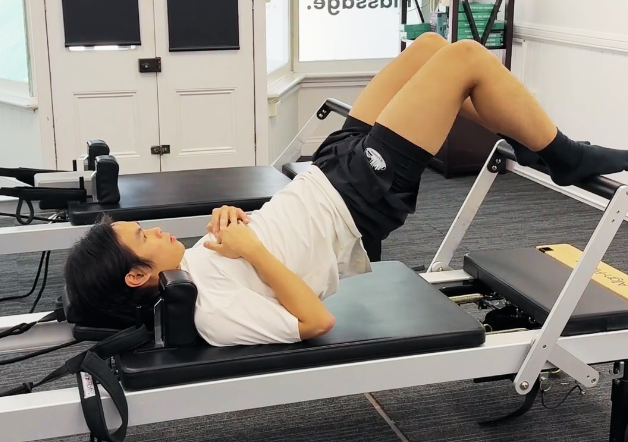
Clinical Pilates turns your treatment into a structured return-to-running plan. Sessions are run by our physio-trained instructors and tailored to your injury and goals.
- Builds strength and control through the hips, pelvis and trunk
- Improves single-leg stability, which every running stride depends on
- Progresses safely from rehab to running-specific strength
- Helps prevent the same injury coming back
The aim is to come back stronger, not just pain-free.
Don’t run through the niggle
Niggles you ignore can turn into long breaks from running. Book in if you notice:
- Pain that changes how you run or makes you limp
- Pain that lasts more than a few days or keeps returning
- Pain that gets worse during a run rather than easing
- Swelling, or pain at rest or at night
The earlier we see it, the sooner you’re back on track.
Book Pilates for runners in Brisbane
Run strong, run longer. Book a physio assessment and get a rehab plan built for runners, combining hands-on treatment with clinical Pilates.
Ashgrove | Moorooka | Samford
Frequently asked questions: Pilates for running injuries
What is clinical Pilates?
Clinical Pilates is Pilates prescribed and supervised by a physiotherapist. Unlike a general class, every exercise is chosen for your injury, your body and your running goals.
How does Pilates help running injuries?
Many running injuries come from weakness or poor control in the hips, glutes, core and calves. Pilates strengthens these areas and improves single-leg stability, so your body handles the load of every stride better.
Which running injuries can Pilates help with?
Clinical Pilates is commonly used in rehab for runner’s knee, ITB pain, shin splints, Achilles and hamstring tendinopathy, hip and glute pain, and low back pain linked to running.
Can I do Pilates while I’m injured?
Usually, yes. Exercises are adapted to what your injury can tolerate, so you can keep building strength while it settles, often before you’re ready to run again.
Will Pilates help stop my injury coming back?
Yes, that’s one of its biggest benefits. By fixing the weak links behind the injury, Pilates reduces the chance of the same problem returning when you build your kilometres back up.
How often should runners do Pilates?
Most runners do well with one to two sessions a week alongside their running. Your physio will tailor this to your injury and training load.
Do I need to see a physio before starting clinical Pilates?
Yes. You’ll start with a physio assessment so we can diagnose your injury and design a Pilates program that’s safe and specific to you. No GP referral is needed.
Is Pilates covered by my health fund?
Clinical Pilates with a physiotherapist may be claimable under physiotherapy extras, depending on your fund and level of cover. Check with your health fund or ask our team when you book.